Engineering Methodologies for the Next Generation of Composite Structures
Engineering decisions made during the design phase increasingly define the performance, manufacturability and long-term reliability of advanced composite structures. As industrial requirements continue to evolve, so does the need for practical approaches that enable more efficient and reliable product development.
The paper that follows presents research conducted by the Composites R&D Department of B&T Composites on the modelling and design of hybrid carbon fibre composite rollers manufactured through Filament Winding and Automated Fiber Placement (AFP). It introduces a design methodology that combines analytical modelling, computational analysis and experimental validation to improve the efficiency of the design process while maintaining reliable structural predictions.
Beyond the specific case study, the methodology demonstrates how digital engineering tools can support more informed design decisions, reduce development effort and facilitate the transfer of engineering knowledge into industrial practice. Its potential extends to demanding composite applications, including the aerospace and defence sectors.
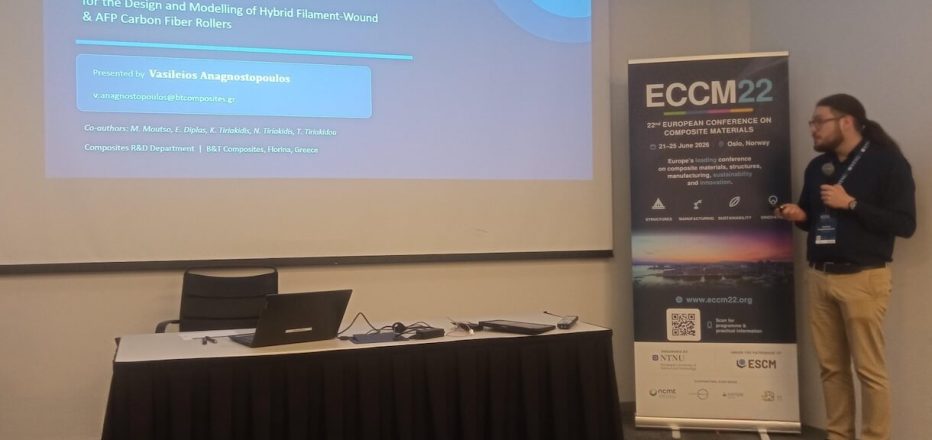
The research was presented at ECCM22 in Norway, one of Europe’s leading international conferences on composite materials. Bringing together researchers and industry professionals, the conference provides an important platform for exchanging knowledge and strengthening the connection between research and industrial application.
The paper is presented below in its original form.