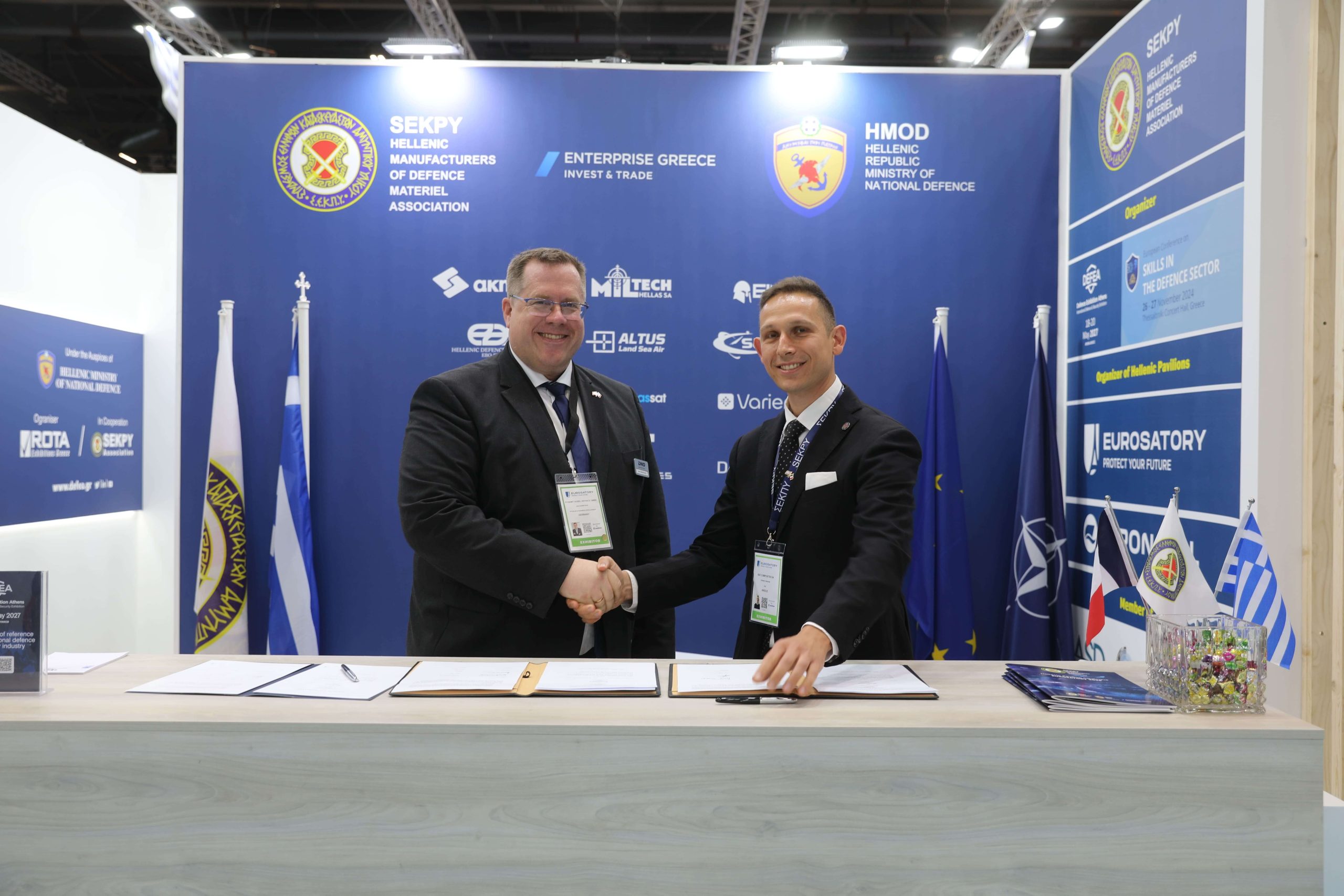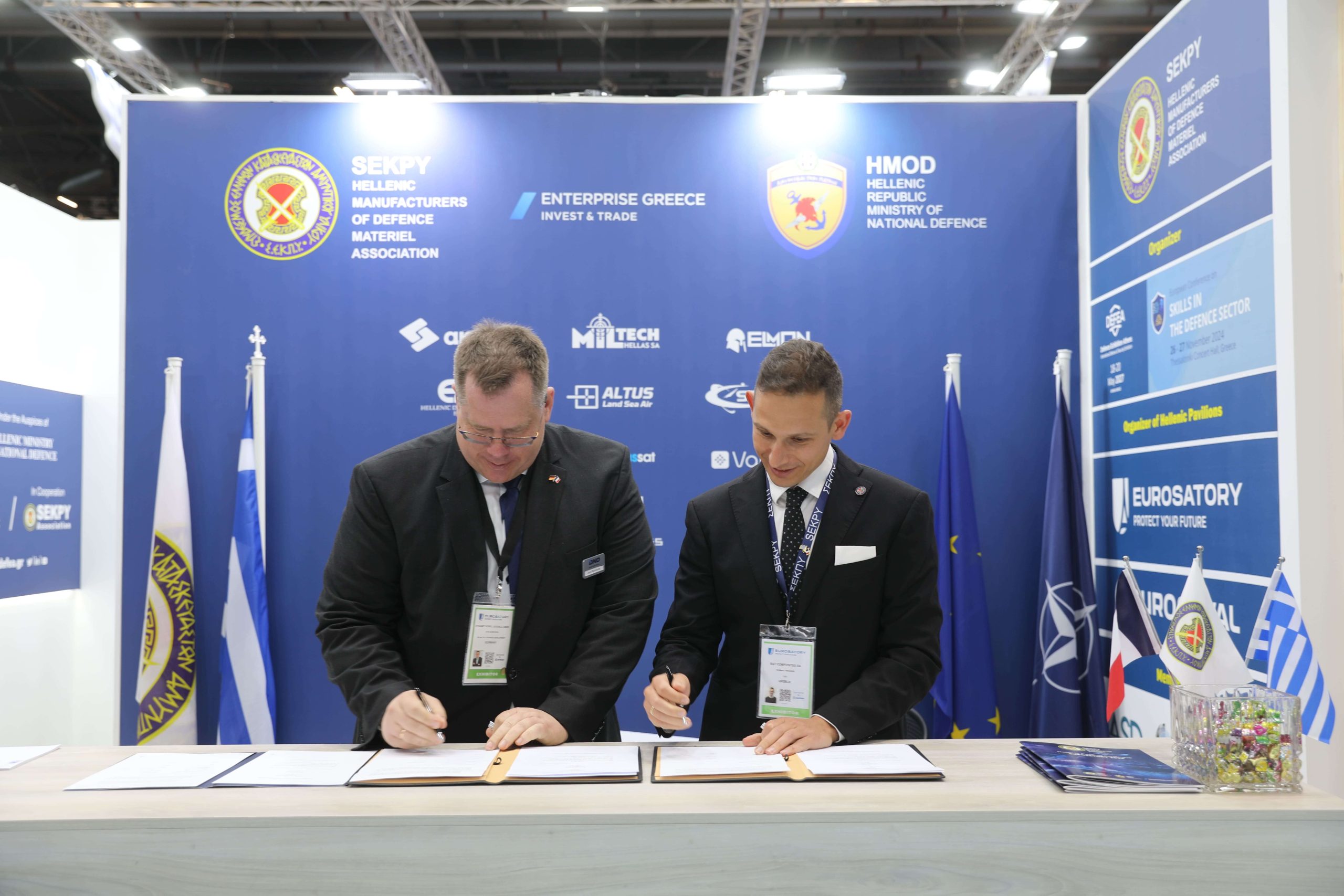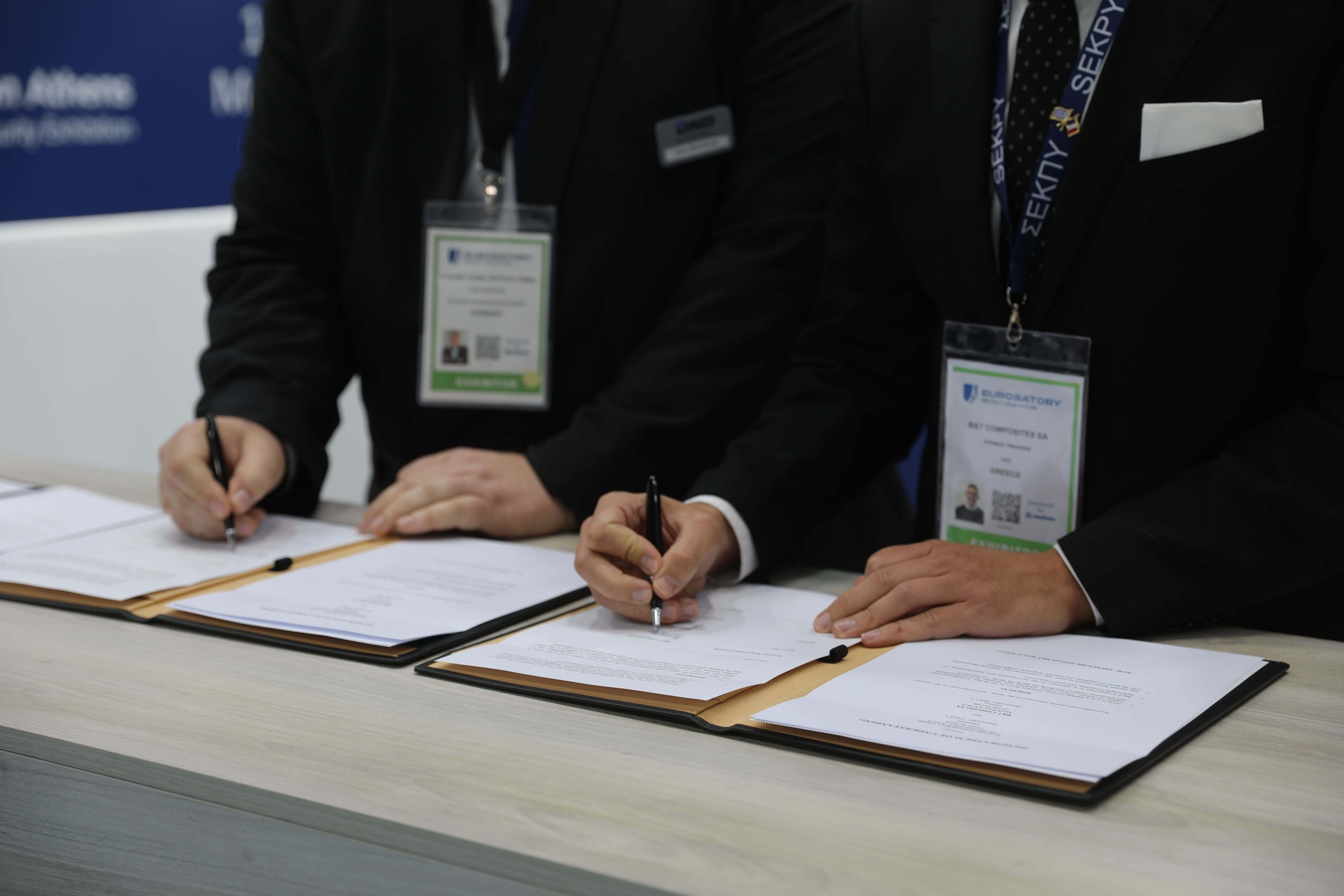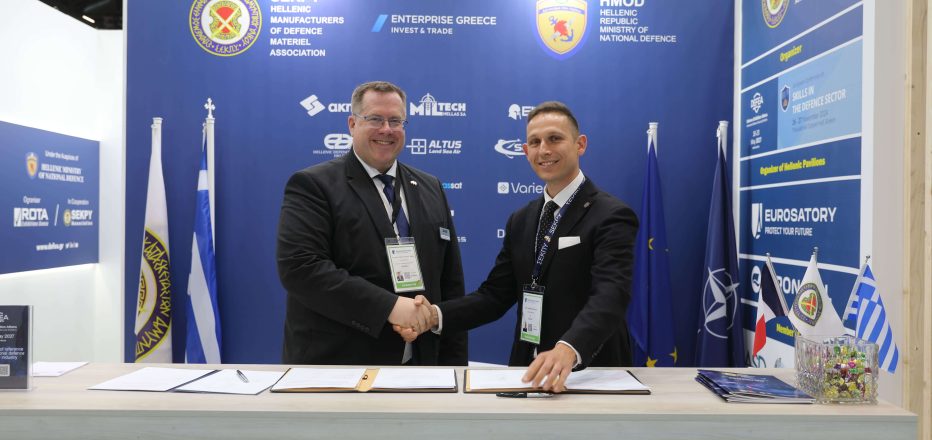
B&T Composites SA and Dynamit Nobel Defence GmbH signed a Memorandum of Understanding during Eurosatory 2026 in Paris.
The agreement opens a structured dialogue between the two companies, focused initially on advanced composite components and the potential development of related production activity in Greece.
It brings together Dynamit Nobel Defence’s experience in defence systems with B&T Composite’s engineering and manufacturing capabilities in lightweight, high-performance composite structures.
Based in Florina, Greece, B&T Composites operates an integrated industrial environment that connects engineering and design with advanced composite manufacturing, hybrid structures, precision machining, quality assurance and testing.
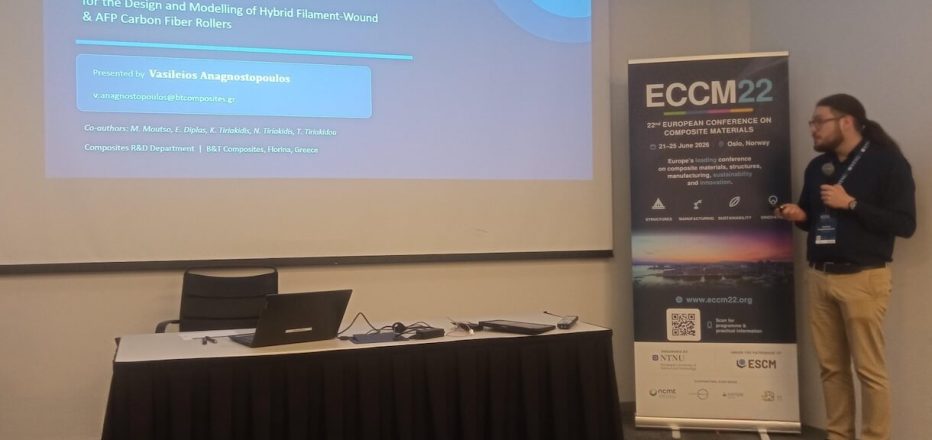
Its production capabilities include filament winding, Automated Fiber Placement and advanced processing technologies for carbon- and glass-fibre structures developed for demanding mechanical, operational and environmental conditions.
Within the scope of the MoU, the two companies will examine areas in which B&T Composites can support future programme requirements and strengthen its participation in the international supply chain of Dynamit Nobel Defence.
Potential fields of cooperation include the manufacture of advanced composite structural components and the progressive expansion of defence-related industrial activity in Greece.
“European defence requires strong industrial capabilities, trusted partnerships and the capacity to translate advanced engineering into reliable production. This Memorandum of Understanding allows us to explore how B&T Composites’ expertise in advanced composite manufacturing can support the future requirements of Dynamit Nobel Defence and contribute to a stronger industrial base in Greece and Europe.”
Kosmas Tiriakidis
Managing Director, B&T Composites
The agreement reflects the growing importance of specialised manufacturers within the European defence ecosystem.
Resilient supply chains increasingly rely on industrial partners that combine engineering expertise, advanced production technologies, consistent quality and the ability to support demanding international programmes.
For B&T Composites, the signing marks another step in the company’s development as an engineering and manufacturing partner for the defence sector.
The two companies will now work to identify specific areas of mutual interest and define the next stages of their cooperation.
Photo caption
Jens Beimforde, Vice President Sales & Business Development at Dynamit Nobel Defence GmbH, and Kosmas Tiriakidis, Managing Director of B&T Composites, during the signing of the Memorandum of Understanding at Eurosatory 2026 in Paris.